Don’t Just Hand Them a Mic—Give Them a Seat (Part 2)

Don’t Just Hand Them a Mic—Give Them a Seat
By: Chuck Khoury

Earlier this week, Bo Wright and I shared why this summer needs to mark a turning point in strategy and mindset. Today, I want to take that conversation further by focusing on the most powerful and overlooked lever we have for transformation: student agency.

When the U.S. recently announced new tariffs on Chinese electric vehicles and semiconductors, business leaders were reminded once again that we live in a world of constant, unpredictable interconnection. These weren’t just political moves—they were global tremors, reshaping supply chains and shifting the stakes for innovation and diplomacy. The lesson? In today’s world, relevance requires the ability to hold complexity, adapt in real time, and lead across differences.

And no one understands that better—or is more prepared to navigate it—than this generation of young people.

Yet the dominant narrative we’ve constructed about them tells a very different story.

Scan the headlines and you’ll see it: “The Most Anxious Generation Ever.” “A Crisis of Belonging.” “Stuck in Screens.” Over and over, these stories pile up—and in many ways, they’ve begun to solidify a dangerous perception in the minds of adults. One that paints young people as fragile, distracted, and disconnected. One that suggests we should manage them, rather than trust them.

We beg to differ.

The young people in our classrooms and communities are not a cautionary tale. They are a blueprint for what’s next.  Informed, digitally fluent, and attuned to identity, equity, and change, they’re not passively consuming the world. Young people today are shaping the world. And they’re doing so with more awareness and intentionality than many adults give them credit for.

And the pace of change they’re living through is unprecedented. A 2023 McKinsey report found that the rate of technological and social transformation over the past 20 years has outpaced the previous 100. Let that sink in. This generation has come of age in a world being rapidly rewritten by climate change, by artificial intelligence, by geopolitical instability, and by cultural flux. And yet we’re still asking them to learn inside a model built for the Industrial Age.

We are blocking their brilliance with outdated structures. And it’s costing all of us.

Earlier this week, my colleague Bo Wright reflected on the opportunity summer gives us to rethink what it truly means to be “prepared.” I want to build on that. Because the truth is, we’ll never prepare students for what’s ahead by keeping them at the margins of their education. The only path forward is to turn schools into communities—ones where students don’t just have a voice, but have power.

This is their education. Their future. They’ve evolved beyond being passive recipients of content, and our failure to evolve with them is a big part of why so many are disengaged.

The role of any educator has fundamentally changed. The mandate now is clear: build systems with students, not for them. For years, we’ve treated student voice like a side quest. We have reduced student voice to focus groups, a checkbox on a survey, or a panel at a conference. But that’s not leadership. That’s symbolism.

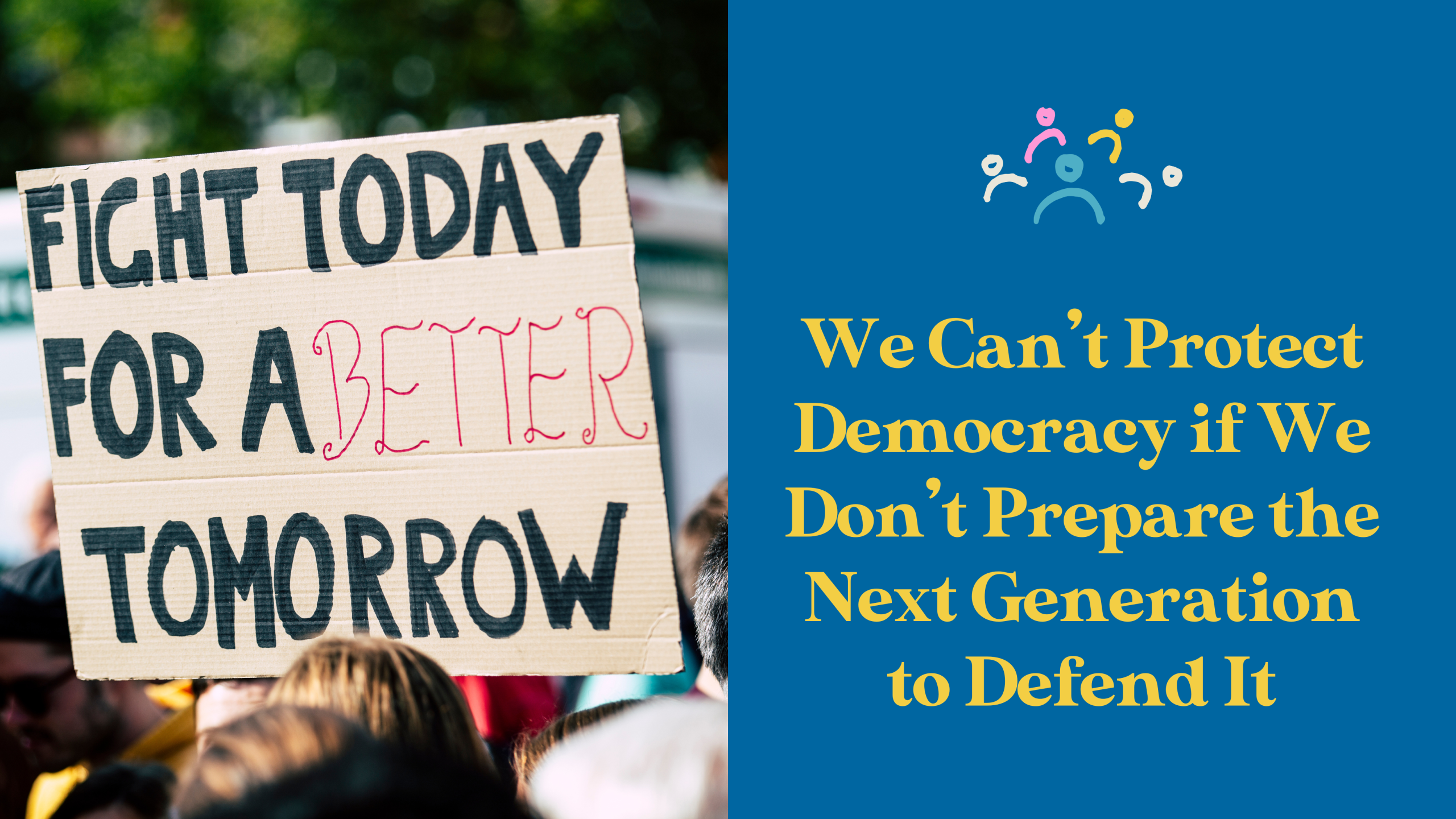
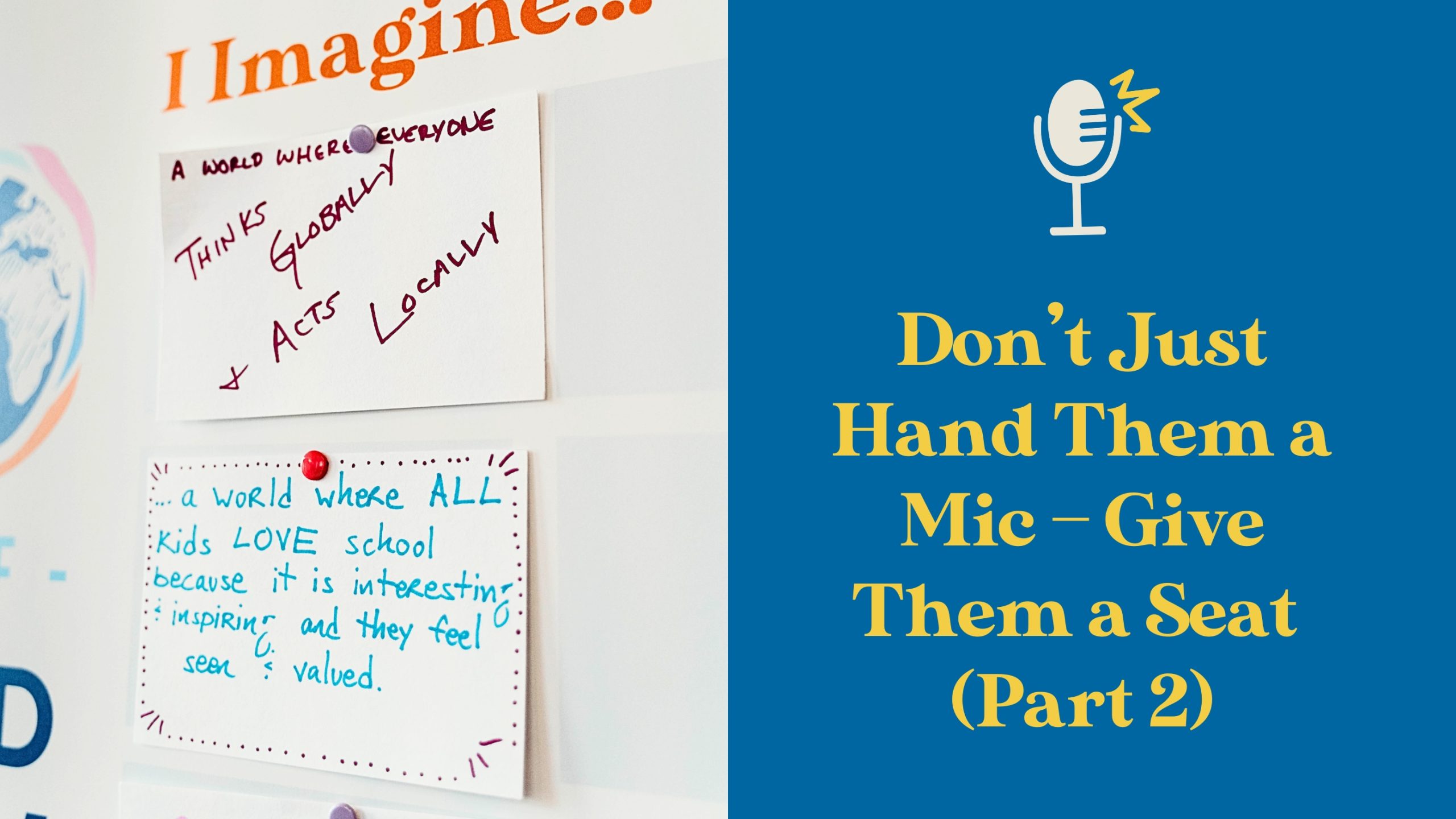
Don’t just hand them a mic. Give them a seat. Because when young people are co-designers of their learning environments, everything shifts. Engagement deepens, retention improves, and staff feel more energized and aligned. The whole system becomes more human, more responsive, and more sustainable.

Forget what came before. This is now. And no one understands now better than they do. They live on the cutting edge of culture and technology. They know how to build digital communities, how to source global perspectives, how to question, remix, and reimagine. If you’re looking for innovation—real, functional, future-ready innovation—start there.

Go back to the basics.
Get to know them.
Don’t invite student voice as a PR move.
Do it because it makes sense.
Do it because it works.
Do it authentically.

After years in this work that include countless initiatives, reforms, and cycles of “transformation”, I’ve learned that the most powerful shifts come when we stop underestimating young people and start listening and building beside them. 

They aren’t the problem. They’re the point.

Let’s stop talking about the future and start building it—with the people who are already living it.

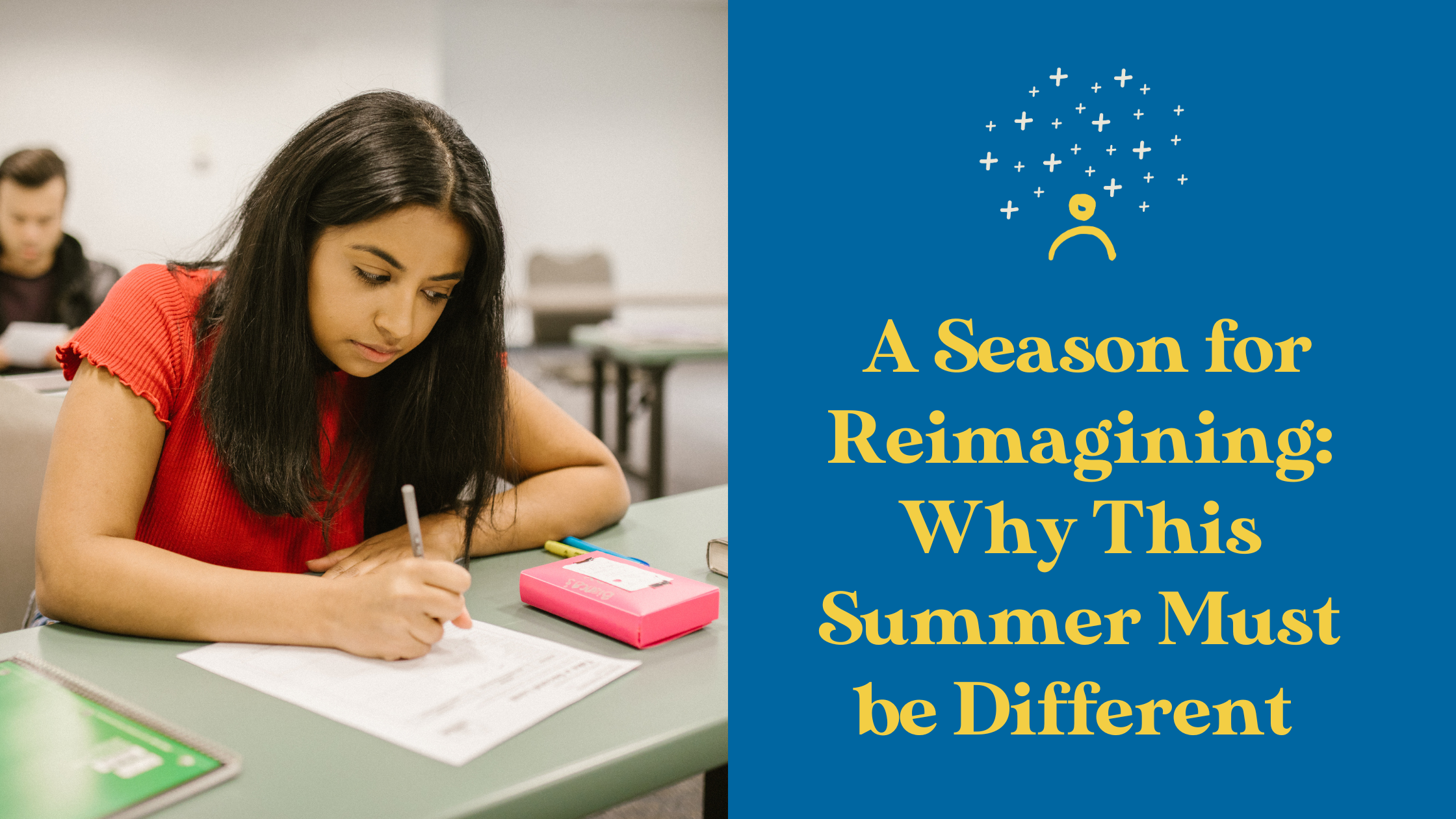
A Season for Reimagining: Why This Summer Must be Different

By: Superintendent Bo Wright and Chuck Khoury

Each year as the school year closes and another begins to take shape, we find ourselves in a familiar rhythm: report cards filed, lockers cleaned out, and calendars already filled with deadlines for the next year. But this summer feels different. 

The world our students are growing up in is shifting fast. And while we’ve tried to keep up, we often find ourselves doubling down on what’s familiar. We adopt new instructional materials. We invest in professional development. We pilot the next promising program to boost outcomes in literacy or math. All of this matters. But too often, we skip over a more fundamental question: 

What exactly are we preparing students to do?

Not in theory. In practice. In the real, complex, beautiful lives they are living now. 

Beyond the Narrow Path 

For too long, readiness has been defined by test scores, GPAs, or college enrollment. We’ve encouraged students to walk a straight line through a system that often ignores the realities of the world they are stepping into— realities marked by economic uncertainty, climate stress, threats to safety, and belonging. 

Young people today need more than content. They need to understand how their learning links to their own purpose and to the problems and possibilities around them. They need confidence to navigate complexity and the capacity to lead through change.  

Education must be more than preparation for a job. It must be preparation for life: dynamic, unpredictable, and shared.  

Students Are Ready. Are We? 

At a recent gathering of students, educators, and community members in Geneva, New York, we asked young people what they wanted from their education. Their responses were direct and deeply insightful. They want more voice. More relevance. Access to internships and college credit. Classrooms led by teachers who listen and adapt. They want to feel like school matters to them, to their futures, and to the world around them. 

And perhaps the most striking of all? The adults in the room didn’t push back. They asked, listened, asked questions, and built on the students’ ideas. Everyone could see it: our education system needs to evolve.

That kind of alignment doesn’t show in a strategic plan or in annual goals. It comes from conversation, trust, and an openness to rethink how we have always done things. 

The Superintendent Role is Shifting

For decades, the job of the superintendent has been rooted in structure. Superintendents worry about building plans, meeting targets, and protecting continuity. Today, that is not enough. The role is changing. Our responsibility isn’t to manage a system. It’s to lead a transformation side-by-side with the community they serve.

Strategic plans, goals, and data dashboards are still useful, but they can’t be the centerpiece. Not when the ground beneath us is shifting so rapidly. What we need now is broader participation. We need to be asking:

  • What do students see that we don’t?
  • What are families hoping for in their children’s future? What do they want us to hear?
  • What kind of schools are our communities ready to help us build?

This Summer Is Critical 

This season isn’t about slowing down. Anyone in this work knows that’s a luxury we don’t have. But it is about being intentional. About choosing to focus our time and energy on what truly matters: deep listening, meaningful reflection, and bold, community-driven action.

And that includes how we engage with our communities. Authentic engagement isn’t a one-time focus group or a survey tucked into a newsletter. It’s an ongoing relationship—one that’s built on trust, reciprocity, and shared responsibility.

We saw what this could look like in Geneva. That gathering wasn’t the end of a conversation—it was the beginning of one. Students and families were clear about what they wanted. And now, the district is committed to looping back. To closing the feedback loop. To continuing those conversations in ways that are transparent, respectful, and enduring.

We’re making that commitment, too.

We’re building systems that center community voice. We’re practicing shared decision-making, not just input collection. We’re expecting all school staff—not just administrators or family liaisons—to engage with families as partners. And we’re backing that expectation with real resources—because family engagement is not a “nice to have.” It’s a prerequisite for student success.

We’re also rethinking how we communicate: making sure our outreach is inclusive and transparent—culturally and linguistically appropriate, timely, accessible, and clear. Because if families don’t feel seen, heard, and informed, we’re not doing our job.

This is what reimagining readiness looks like. Not just for students—but for systems.

This Is The Work

We are not preparing students for our future. We are preparing them for theirs. And while we can’t predict exactly what that future will hold, we can ensure they leave our schools equipped to lead with curiosity, empathy, adaptability, and courage.

This season doesn’t call for more hustle. It calls for alignment. For imagination. For leadership rooted in purpose and grounded in community. 

Let’s not waste it. 

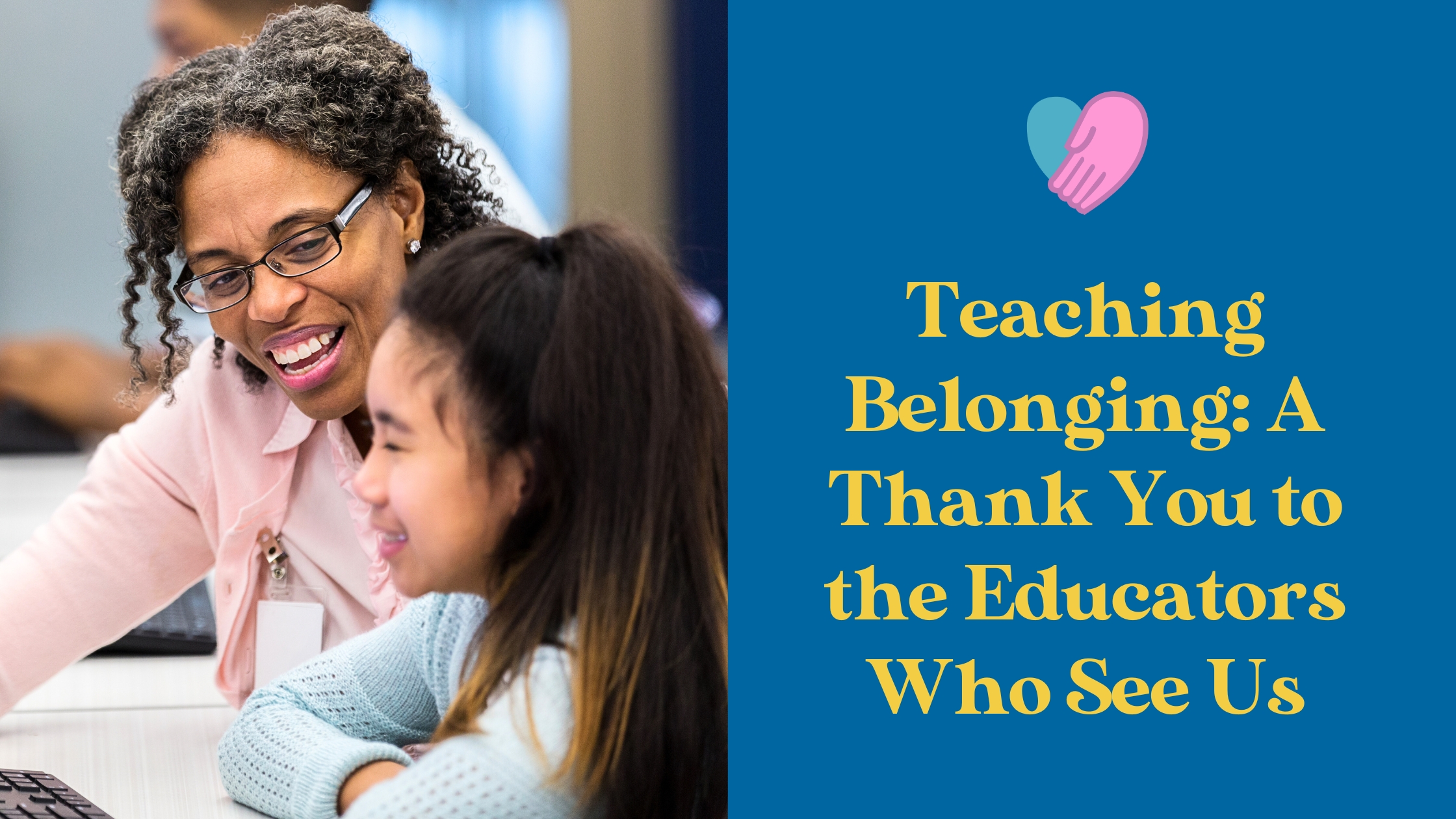
Teaching Belonging: A Thank You to the Educators Who See Us

Teaching Belonging: A Thank You to the Educators Who See Us
By Allison Aliaga, Chief Growth Officer, World Savvy

I became an American by accident.

My parents fled violence in Peru, crossed a desert with nothing but faith and grit, and found themselves in a Southern California hospital after a car crash. My mother, bruised and scared, barely spoke the language. But she understood one sentence: “Congratulations, you’re having a baby.”

That’s how I became an American. 

I was born an American, but my childhood was shaped by fear. Fear that one day my parents, who were undocumented, wouldn’t come home. Fear that they’d be taken, and my brother and I would be left behind.

If you’ve never lived with that kind of fear, it’s hard to explain. It weaves itself into you. It teaches you how to disappear. How to quiet your voice. How to scan a room faster than you can read a book. How to shrink yourself just enough to fit in—but never stand out.

School was supposed to be a safe place. But in many ways, it made the fear of not belonging sharper.

There were teachers who changed my experience in school. Educators who saw me. Who didn’t ask me to leave parts of myself at the door. Who named my strengths before I could fully recognize them. They helped me find my voice—as Allison, and as an American.

So when I saw that Denver Public Schools sued the federal government to prevent immigration enforcement from entering their schools, it was a clear act of choosing courage over comfort. Although a federal judge denied their request, the district’s efforts highlight the unwavering commitment of educators and the community to assert: You are safe here.

At World Savvy, this belief—that students can only truly thrive when they feel they belong—is at the heart of everything we do. We work with schools and educators to reimagine classrooms as spaces where identity isn’t erased, it’s celebrated. Where students don’t have to choose between achievement and authenticity. Where belonging is foundational—not an afterthought.

We begin with connection. We help educators create environments where students are not just present, but known. Where trust and psychological safety aren’t nice-to-haves—they’re the first step in a transformative learning journey.

Because when students feel safe, they take risks.
When they feel seen, they speak up.
And when they feel they belong, they flourish.

And when we make that possible for young people, we’re not just transforming classrooms—we’re shaping a generation of adults who will thrive in their communities, lead with empathy, and live into their full potential.

This Teacher Appreciation Week, I want to say thank you—not just for teaching content, but for creating conditions.

To the educators who ask the deeper questions.
Who stand up for the students whose stories the world doesn’t always make space for.
Who understand that every child brings stories, struggles, and brilliance that deserve to be honored.

You make it possible for students to show up fully.
And you make it possible for our schools to become what they were always meant to be:
Places of possibility. Of purpose. Of belonging.

Local Media Spotlight: World Savvy CEO Op-Ed on Human-Centered Education in an AI World

New Op-Ed from our CEO, Hamse Warfa, was featured in the Minnesota Star Tribune, “Human-Centered Education in an AI World.” 

As AI transforms our world, are we preparing students to follow algorithms—or lead with purpose?

From middle schoolers addressing homelessness to student-led forums on democracy and AI, this piece shows what’s possible when young people are trusted to lead.

We don’t just need AI education—we need human-centered education in an AI world.

READ MORE HERE

About World Savvy

World Savvy is an organization that partners with schools and districts to reimagine education and create more inclusive, student-centered, and future-ready learning communities. Learn more about our work with schools and districts.

World Savvy Changemaker Hub in Geneva, New York

Fingerlakes1.com featured World Savvy’s Changemaker Hub in Geneva, New York on May 5, 2025. In partnership with the Geneva City School District, this day-long learning experience aims to spark student-driven ideas and forge new connections that challenge outdated approaches to teaching and learning.

READ MORE ABOUT THIS DAY ON FINGERLAKES1.COM

About World Savvy

World Savvy is an organization that partners with schools and districts to reimagine education and create more inclusive, student-centered, and future-ready learning communities. Learn more about our work with schools and districts.

Reimagining School, Reclaiming the Future: Part 2

A New Way to Do School—And Why It’s Working

By Hamse Warfa, CEO of World Savvy

If we want students to be more engaged, we need to design learning that actually engages them. That means leaving behind outdated models and embracing experiences that reflect the world students live in—and the future they’re stepping into. And it’s already happening.

At Sejong Academy in Minnesota, students explored how to build belonging for neighbors experiencing homelessness. What began as a conversation turned into action—interviews, local research, and projects rooted in empathy and dignity. It wasn’t just about civic learning—it was about community leadership.

At St. Anthony Middle School, students addressed hunger through capstone projects, connecting their research and storytelling to real-world solutions. For many, it was the first time they were asked to apply what they were learning to something they cared about. That made all the difference.

In Denver, George Washington High School has woven global competence across every subject—infusing inquiry and real-world problem-solving into the core of the curriculum. It’s not an add-on; it’s how learning happens.

And at Hanger Hall in North Carolina, students tackled financial literacy through a project called “Myself at 30.” They used math to project their future budgets and imagined careers and reflected on the lives they hope to lead. The result? A deeper understanding of their education’s real-life value—and their own agency within it.

These stories aren’t isolated wins. They’re part of a growing shift toward student-centered, purpose-driven learning. When we trust students with real work on real problems, they rise. And when their voices and identities shape what happens in school, they thrive.

This isn’t an enrichment activity. It’s the future of school—and it’s long overdue.

The root of disengagement isn’t apathy—it’s irrelevance. When students don’t see themselves, their communities, or the world in their learning, they disconnect. And who could blame them?

What brings students back is connection. Relevance. Challenge. It’s classrooms that invite curiosity and honor differences. It’s schools that see students not just as future workers but as present-day changemakers.

The most effective educators we see aren’t just delivering content—they’re cultivating meaning. They create space for students to reflect, wrestle with complex questions, and take action. And they treat learning not as preparation for the “real world” but as a part of it.

We don’t need to abandon structure or standards. Rather, we need to connect structures and standards to students’ lived experiences. We also need to be clear on what we’re aiming for. Are we preparing students to thrive in a fast-changing, polarized world? To solve problems we can’t yet imagine? If not—we have to ask: what are we preparing them for?

The good news is that a different way is possible. And it’s already underway.

Reimagining School, Reclaiming the Future: Part 1

What Today’s Students Know That We’re Ignoring

By Hamse Warfa, CEO of World Savvy

We are living through a profound moment of reckoning in education.

Across the country, young people are showing up to school, but many are no longer showing up to learn. Nearly three-quarters of third graders say they enjoy school. By 10th grade, that drops to just one in four. This isn’t just about adolescence—it’s a widespread disengagement that cuts across geography, school type, and income level. And the consequences today are more serious than ever.

We’re asking students to navigate a world shaped by generative AI, climate change, global conflict, and disinformation—yet many say their education feels disconnected from all of it. When they look at what’s happening in the world and then at what’s happening in school, the gap isn’t just wide—it’s a chasm. They’re not apathetic. They’re paying attention. And they know the world requires creativity, collaboration and bold thinking—skills they don’t always see nurtured in their classrooms.

This is happening as our national education landscape grows more unstable. With calls to dismantle the Department of Education and threats to funding that supports our most vulnerable students—those with learning differences from rural areas and low-income communities—we face real uncertainty about the federal role in delivering equitable education.

At World Savvy, we believe this moment is a call to action. Disengagement isn’t inevitable. It’s a symptom of a system that hasn’t kept pace with the world around it. But if the problem is systemic, the solution can be too. We need to design learning environments that reflect students’ lives and the world they’ll inherit—because education should prepare young people not just for work but for life in a diverse, dynamic democracy.

As a father of two teenagers in the Prior Lake-Savage School District—one entering her senior year and the other close behind—I see these challenges up close. Like any parent, I want my kids to build lives of purpose and to find work that’s meaningful not just for them but for the world around them. My father used to pray that his children would grow up to be useful to society. I carry that wish forward every day—for my own kids and for every student I have the privilege to serve.

That’s why this work matters so much to me, personally and professionally. Last fall, Prior Lake-Savage partnered with World Savvy to host a Changemaker Hub, where more than 100 students and 35 educators, leaders, and community members gathered to explore a powerful question: What would it take to make school a place where every student thrives?

The answers were honest and refreshingly clear.

Students talked about the need for collaboration—not just in projects but in shaping their education. They wanted learning that felt relevant, classrooms that honored different ways of thinking, and schools where failure wasn’t punished but used as a way to grow. They imagined new approaches: mental health classes, career-focused electives, experiments with teaching methods, more choice, and more voice.

What gave me hope wasn’t just what students shared—but how the district responded. Prior Lake-Savage is shifting the power dynamic, inviting students and families into the process of defining success and reimagining the path to get there. They’re not just listening—they’re acting.

As a parent and an education leader, I see this as a model worth emulating. When we stop designing school for students and start building it with them, everything changes. We make learning more engaging. More inclusive. More human.

Coming up in Part II: What a new way of doing school looks like in action—and how it’s already happening across the country.

Preparing Students for the Future

A rapidly changing workforce and increasing complexity demand a shift in how we prepare students for the future and how we support educators to better guide their students. The World Economic Forum states that the labor market values “uniquely human skills” such as critical thinking, communication, and collaboration. Schools must be dynamic spaces where students become problem-solvers and engaged citizens, guided by educators who foster inclusive learning environments.

Elevate Student Choice and Agency

When students take ownership of their learning, they develop confidence, critical thinking, and leadership. At Ella Baker Global Studies and Humanities School, 4th graders reimagined their playground with World Savvy coaching. They interviewed classmates, including those with disabilities, to design a more inclusive space, transforming a treehouse into a ground-level playhouse. This student-led project fostered empathy and problem-solving.

Enhance Relevance in Learning

Connecting classroom content to real-world experiences makes learning meaningful. At Hanger Hall in North Carolina, students explored financial literacy through an inquiry-based project called Myself at 30. Using math, they projected future expenses and careers, demonstrating the practical applications of their education. Seeing learning’s impact fosters purpose and preparedness.

Boost Educator Skills

Supporting educators is key. Superintendent Jason Berg emphasizes, “World Savvy helps build the internal capacity to think beyond today and co-create a future with staff.” In Farmington Schools, this approach has sparked innovation, inspiring educators to integrate future-ready skills.

By empowering students and educators, we foster adaptability and curiosity—ensuring the next generation is ready to lead. World Savvy helps schools develop global competence, embedding essential skills into curriculum and culture. Learn more at www.worldsavvy.org.

Local Media Spotlights World Savvy Changemaker Hub in Southeast Minnesota

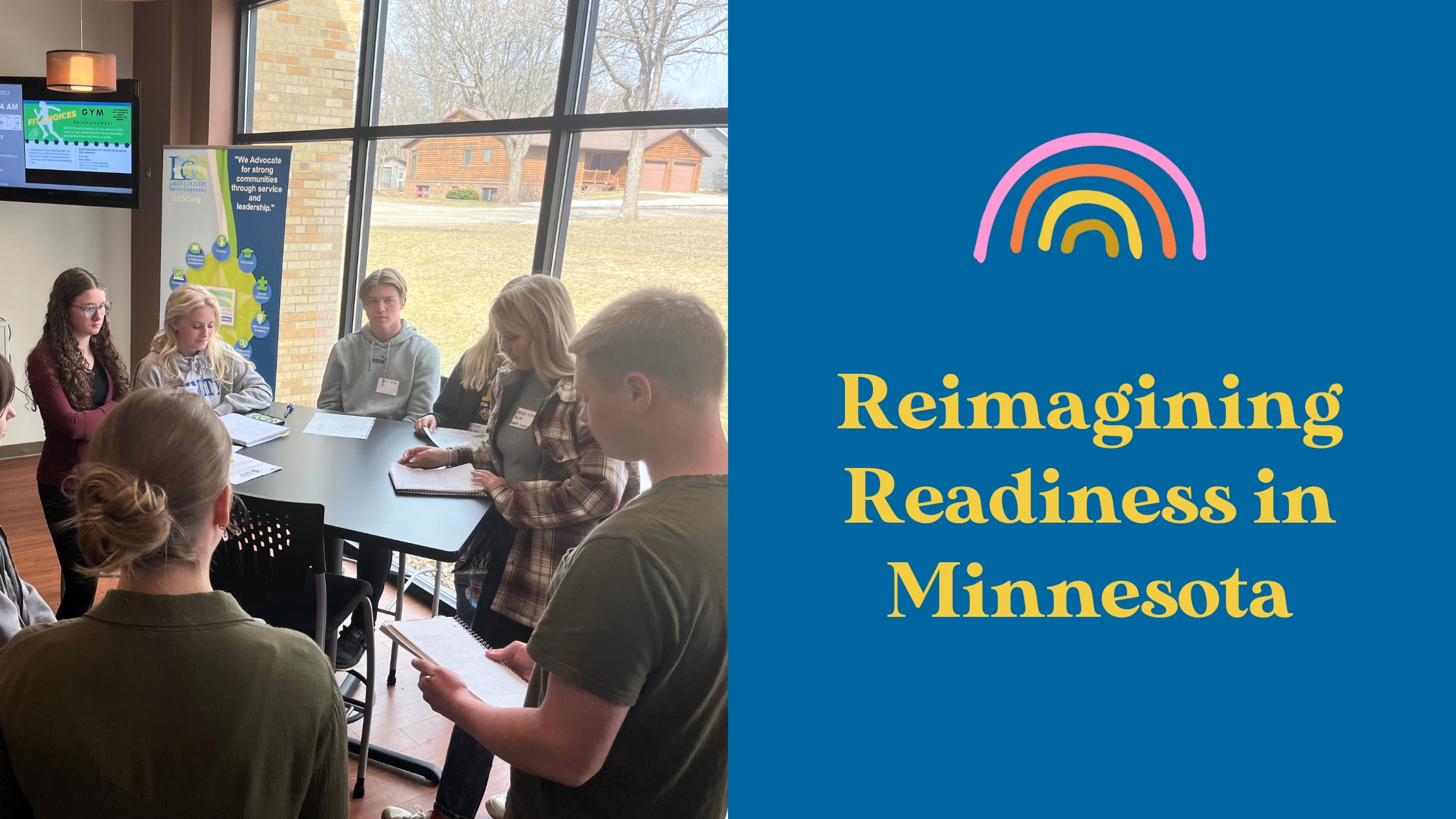
Local media outlet KIMT 3 featured World Savvy’s Changemaker Hub in Rochester, Minnesota on November 19, 2024. In partnership with the Southeast Service Cooperative, this day-long learning experience brought together over 100 students, educators, school leaders, and community members from six school districts. Students and adults alike reflected on their school experiences across generations and brainstormed ideas for reimagining the future of education.

This event was part of a series of Changemaker Hubs funded by New Pluralists to encourage diverse voices in education.

WATCH WORLD SAVVY ON KIMT3

About World Savvy

World Savvy is an organization that partners with schools and districts to reimagine education and create more inclusive, student-centered, and future-ready learning communities. Learn more about our work with schools and districts.

World Savvy Announces Hamse Warfa as CEO

Hamse Warfa, presidential appointee as Senior Advisor for inclusive democracy, former refugee from Somalia and tech entrepreneur joins World Savvy as CEO.

MINNEAPOLIS, MINNESOTA, US: Hamse Warfa, renowned global leader, democracy and workforce development expert, bestselling author and speaker, joins World Savvy, a national education nonprofit, as Chief Executive Officer. 

Hamse is a transformational leader who brings to World Savvy a proven record of global and local impact on civic engagement and economic development while consistently partnering with young people as changemakers. Drawing from his 25 years of global leadership spanning federal and state governments, philanthropy, nonprofits and the private sector, Hamse brings unique lived experiences including his journey from child refugee to U.S. presidential appointee and global tech entrepreneur. He is committed to expanding the reach of World Savvy’s work to transform K-12 education into an inclusive, adaptive and future-ready system that ensures all young people can thrive. He is poised to lead the advancement of World Savvy’s emerging Thriving Democracy Initiative, which seeks to enhance young people’s civic and workforce readiness and success in a diverse, interconnected local and global community.

Hamse’s connection to World Savvy runs deep through over a decade of service as a volunteer, fundraiser and collaborator with the outgoing Co-Founder and CEO, Dana Mortenson. During this critical founder transition at World Savvy, Hamse embraces the responsibility of building on the legacy of the founders, Dana Mortenson and Madiha Murshed, who established World Savvy over two decades ago, with the vision that young people in the United States must be prepared for a more diverse, interconnected and interdependent world. Throughout his involvement, Hamse has written and spoken on the impact of engaging learners, championing place-based education and promoting inclusive and innovative teaching methods.

“I’m beyond thrilled and deeply honored that Hamse will be joining World Savvy as our next CEO,” shares Dana Mortenson. “I’ve known Hamse for more than a decade and have treasured our friendship and collaboration. His exceptional talents, experiences and knowledge are a perfect fit for World Savvy and I am confident he will take our organization to new heights. I am looking forward to supporting him as he steps into this role.”

As a father of four children, Hamse understands the importance of preparing students for a rapidly changing world. “As a refugee student, I struggled in public schools in Colorado and California,” Hamse recalls, “and I would have benefited from an education that supported students to feel safe, seen and heard as creative problem solvers and responsible citizens.” Dedicated to increasing the reach of World Savvy to more students in new regions of the U.S., Hamse will advance the implementation of World Savvy’s goals. 

Word Savvy is a critical partner for K-12 education to remain the bedrock of a thriving, multi-ethnic democracy. Hamse recently served in Washington D.C., as a Senior Advisor for equity and inclusive democracy in the U.S. State Department. He advanced the administration’s democracy agenda at home and abroad, including supporting 74 nations to participate in the 2023 Global Summit on Democracy. In recognition of his innovative efforts, Hamse received a State Department Meritorious Honor Award. As CEO, Hamse will continue World Savvy’s mission to bridge gaps in empathy and understanding, equipping students with critical thinking, perspective-taking and evidence-based judgment—skills essential for navigating our diverse world. 

# # #

About Hamse Warfa

Hamse Warfa, a former child refugee turned U.S. presidential appointee, has over 25 years of global experience across various sectors. His mission is to inspire leaders to translate challenges into tangible solutions and impact through leadership strategy, training and innovative technology tools. In January 2022, Warfa was appointed as Senior Advisor to the U.S. State Department to advance a global democracy agenda, receiving a State Department 2023 Meritorious Honor Award for innovation and advancing equity.

Prior to joining the federal government, Warfa served as Deputy Commissioner for Workforce Development in Minnesota. He is also a successful tech entrepreneur, co-founding BanQu Inc. and Tayo Consulting Group, and previously worked as a Senior Program Officer at the Margaret A. Cargill Foundation.

Warfa holds a Master of Science in Organizational Management and Leadership from Springfield College and a Bachelor’s in Political Science from San Diego University. He completed executive education at Harvard Business School and is a Bush Foundation Leadership Fellow, recipient of the Minnesota Statewide Facing Race Award, and an Ashoka Global Fellow. Warfa is the author of the bestseller “The Transformational Leader: Twelve Practices for Driving Lasting Change” as well as “America Here I Come: A Somali Refugee’s Quest for Hope.”

About World Savvy

World Savvy is a national K-12 nonprofit partnering holistically with schools, districts and communities to redefine what constitutes a quality education and reimagine the student experience. Together, we are creating future-ready and adaptable learning environments where all young people develop the skills and dispositions they need to thrive in a diverse, complex and interconnected world. Learn more at worldsavvy.org.