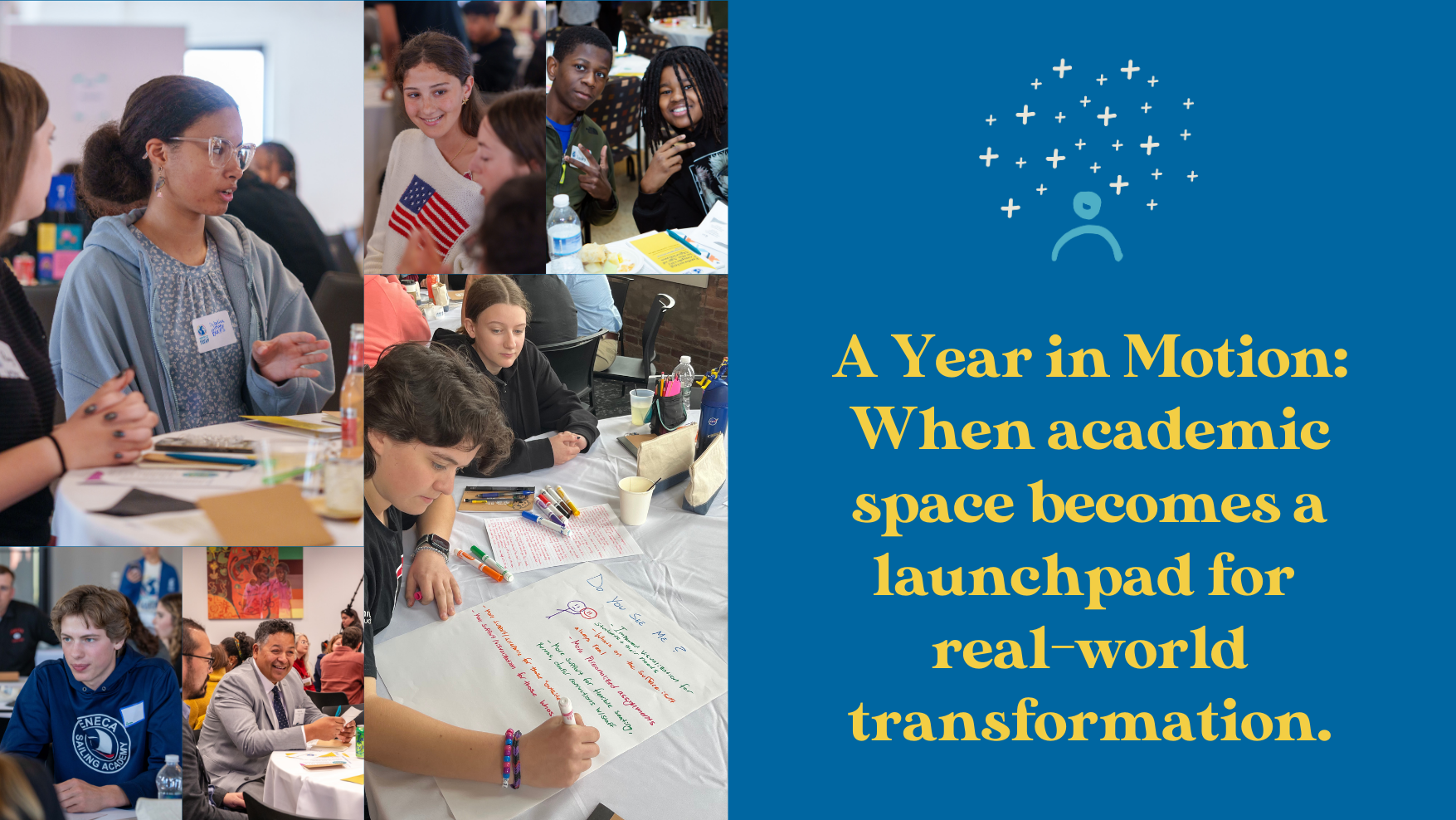
As 2025 comes to a close, we’ve been reflecting on the power of student voice to spark change. Across our Changemaker Hubs, leadership cohorts, and comprehensive school partnerships, a clear thread has emerged. When students are given space to speak, they share the wisdom of this moment, insights into what needs to shift, what questions need asking, and what actions matter. And when communities listen and make a plan, learning moves beyond the classroom. It becomes a catalyst for change in the community, tackling real-world issues and creating ripple effects that stretch far beyond school walls.
We saw this in rural Michigan, where a group of students redesigned their school’s mental health programming. They listened to families, gathered data, and worked alongside leaders to create a plan for change. Their teachers didn’t direct them. They held space, guided, and helped translate ideas into action. In those classrooms, leadership wasn’t granted to students as a title or a project. It emerged organically from the issues they cared about most.
A similar current ran through our Changemaker Hub at Wayne Finger Lakes. Students there weren’t just generating ideas. They were interrogating the very foundations of schooling, how it responds to the needs of their generation, what purpose it serves, and how it must evolve. Educators didn’t step in with answers. They stayed in conversation, working with students to turn questions into pathways for action.
At Ella Baker, the change is growing district-wide. Students began by reimagining their playground, how it could be inclusive and welcoming for all. That experience led to new conversations, new planning, and now, the beginnings of a community garden designed to benefit the broader neighborhood. The work didn’t stop at a single achievement. It set in motion a culture of student-led initiatives that move outward, step by step.
In Howell, classrooms have explored global perspectives while honoring neurodivergent learners’ voices, ensuring that students who experience the world differently also help shape it. And in Alexandria, educators are rethinking course design so that curiosity leads to civic action, projects that affect real neighborhoods and real people. In each of these places, when school systems hold space, listen deeply, and respond, learning transforms into something far more than academics.
World Savvy’s role is not to deliver programs from the outside. It is to nurture the conditions where this transformation becomes inevitable. Our Changemaker Hubs, leadership cohorts, and school partnerships aren’t isolated efforts. They are connected opportunities for adults and youth to grow together. Teachers, leaders, and community members learn alongside students how to embed durable skills such as critical thinking, collaboration, empathy, and problem-solving into every lesson and every decision. Students see their ideas valued and acted upon. Communities witness tangible change and begin to expect more of what young people can do. Momentum spreads not because we push it, but because people experience its impact firsthand.
In a time when societal challenges feel urgent and complex, these local movements matter more than ever. Communities will be the change that the government alone cannot deliver. What we’ve seen this year is that when schools center student voice and adult leadership, they spark action, foster learning, and create ripple effects across our nation. The academic space becomes a launchpad for real-world transformation, demonstrating that the future is not something students inherit. It is something they actively create.
As we look toward 2026, this groundswell continues. Every project, coaching session, and leadership reflection adds momentum. Not as a collection of isolated moments, but as a growing network of people committed to an education system that prepares young people not just to navigate the world, but to shape it. Together, educators, students, and supporters like you are building the kind of education, and the kind of future, every student deserves.