World Savvy Statement: January 27th, The murder of Alex Pretti

World Savvy Statement on Recent Events in Minnesota

World Savvy condemns the killing that occurred in Minneapolis and extends our deepest condolences to family, friends, and community members who are grieving. We also want to acknowledge the fear and uncertainty that many students, families, and educators are experiencing right now.

When the world becomes unstable, schools are often one of the first places where that instability shows up. We have seen this in Minnesota over the last few weeks, as schools have faced lockdowns, closures, and disrupted learning. In some districts, absenteeism has surgedas families keep children home out of fear. 

In times like these, schools need more than reassurance. They need support for families in crisis, steady guidance for educators, and coordinated partners who can help them respond quickly and thoughtfully. As fear and uncertainty ripple through classrooms, leaders are balancing instruction with safety, communication, and care for their communities, creating a critical need for outside support. Meeting this moment requires aligned, flexible assistance that steadies adults so they can steady young people.

Yet, these words must be backed up by actions. World Savvy is stepping in as one of those partners, providing rapid, responsive support to schools across the Minneapolis–Saint Paul area to help educators create steadiness, belonging, and continuity of learning.

Our response includes:

  • Dedicated time for educators and school leaders to talk, process, and support one another so they aren’t carrying fear or stress alone.
  • Opportunities for schools to connect with each other, share what’s working, and problem-solve together in real time.
  • Simple tools and routines that help students talk about what’s happening in their world, think critically, and stay engaged without lowering expectations.
  • Hands-on help adjusting plans and lessons when attendance is uneven or learning shifts between in-person and virtual.

World Savvy was founded in the aftermath of 9/11 out of a belief that fear should not be the primary way young people learn about the world. Our work is grounded in a long-standing belief: education is not only about content, but it is also about the conditions that allow students to learn, participate, and thrive. When fear enters classrooms, the response must be care, clarity, and support.
World Savvy Statement on Today’s Killing in Minneapolis

Today’s killing of a civilian during a federal immigration enforcement operation in Minneapolis is devastating and unacceptable. As reports emerge that an ICE agent shot and killed a person amid an extraordinary federal deployment, the loss of life and the fear spreading through our community demand immediate attention and accountability.

We express our deepest sorrow to the family and loved ones of the person killed. Moments like this severely strain trust, particularly for immigrant communities already living with heightened fear and uncertainty.

For many young people, this is not an abstract policy debate. It is real life. It is family, community, and safety. Yet too often, civic education avoids the very moments when democracy is most contested. If we want students to be truly ready for civic life, we must support them in asking hard questions, examining power and accountability, and engaging with complexity as it unfolds in real time.

Silence in moments of violence and injustice does not protect students. It leaves them without guidance, context, or space to process fear and grief. Young people deserve learning environments where they can think critically, consider multiple perspectives, and practice engaging with democracy in ways that are informed, compassionate, and humane.

World Savvy stands in solidarity with the Minneapolis community, with immigrant families, and with the educators supporting students through this moment, and all those affected by today’s events. We urge leaders to prioritize transparency, accountability, and human dignity as this situation continues to unfold.


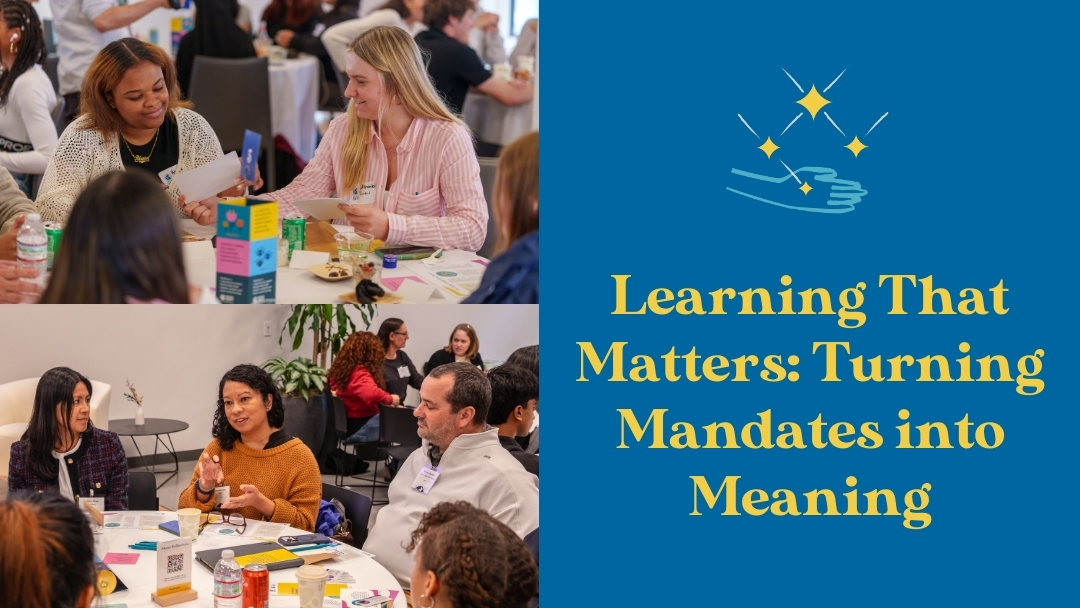
Learning That Matters: Turning Mandates into Meaning

Schools today face high expectations. Teachers are being asked to implement new curricula, participate in ongoing professional learning, and meet growing accountability measures. At the same time, districts are focused on ensuring students meet clearly defined standards. Compliance and High-Quality Instructional Materials (HQIM) sit at the top of the priority list, and the pressure to get it right is real.

At World Savvy, we understand that reality. We do not come in with a separate agenda. Our goal is the same as the schools and districts we partner with: helping educators and students succeed within the systems they are already navigating.

The difference is how we support that success.

HQIM and required frameworks provide an essential foundation for instruction. But without intentional support, even strong materials can feel rigid or disconnected from students’ lives. World Savvy works alongside teachers to bring required content to life. We help educators embed student voice, real-world challenges, and culturally responsive practices into the lessons they are already expected to teach.

One powerful example comes from Ms. Awo Salad, an 8th and 9th-grade teacher at a STEM-focused charter school serving a predominantly East African, Somali-majority student population.

In Awo’s classroom, standards-aligned instruction became a way for students to engage with issues directly affecting their communities. With World Savvy’s coaching and tools, students analyzed articles to better understand their rights and the broader social and political context shaping their lives. They then created informational and uplifting posters focused on knowing one’s rights, countering misinformation, and affirming community dignity.

These were not just classroom assignments. They were public-facing pieces, soon to be displayed in a local Somali mall.

“The impact was immediate,” Awo shared. “Students were more engaged because the work mattered to them personally.”

Awo also described how dialogue frameworks, questioning guides, and sentence stems helped push students toward deeper, more critical thinking, especially around global issues, identity, and justice. The quality of classroom conversations shifted. Students became more thoughtful, more confident, and more willing to engage with complex ideas.

What changed was not the standards. It was how students were invited into the learning.

This is what it looks like when compliance becomes a doorway rather than a constraint.

World Savvy’s approach is rooted in listening. Over time, we have recorded and reflected on the voices of hundreds of students across the country. Students consistently ask for learning that feels relevant, affirming, and connected to the world beyond school.

Our work helps educators translate that understanding into daily practice. Student agency and purpose are not added on. They are integrated into existing goals and expectations.

The impact is tangible. Students remember lessons where their ideas mattered, where collaboration felt real, and where learning connected to their lives. These experiences support academic outcomes while also building confidence, skills, and a sense of belonging.

Turning mandates into meaning does not require lowering expectations or abandoning required frameworks. It requires rethinking how existing tools, content, and professional learning can be used to create purposeful learning experiences. Experiences that prepare students for life beyond the classroom.

As Awo put it, “As a Somali-majority, East African-majority school, we are deeply committed to becoming learned, engaged citizens of this country. Our students have so much to give back. We are educating the next generation of engineers, doctors, and leaders who will shape our communities with knowledge, empathy, and intention.”

This is the work World Savvy partners with schools to do every day. We help educators meet their mandated goals while creating classrooms rooted in relevance, agency, and purpose.

When this happens, students do more than meet expectations. They exceed them. They feel capable, connected, and prepared to contribute meaningfully to their communities and the world around them.